
Hysterectomy 子宫切除手术
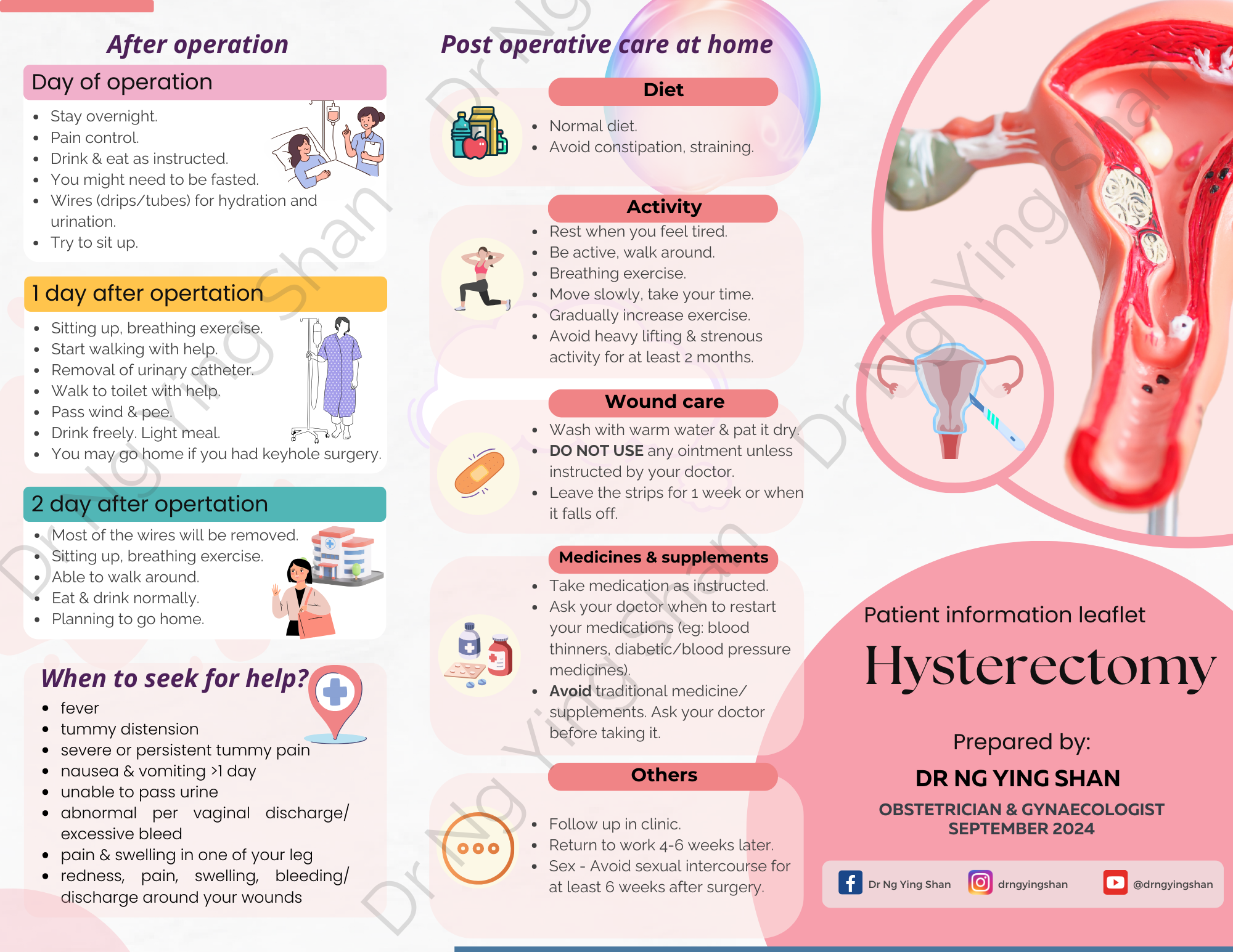
Patient information leaflet
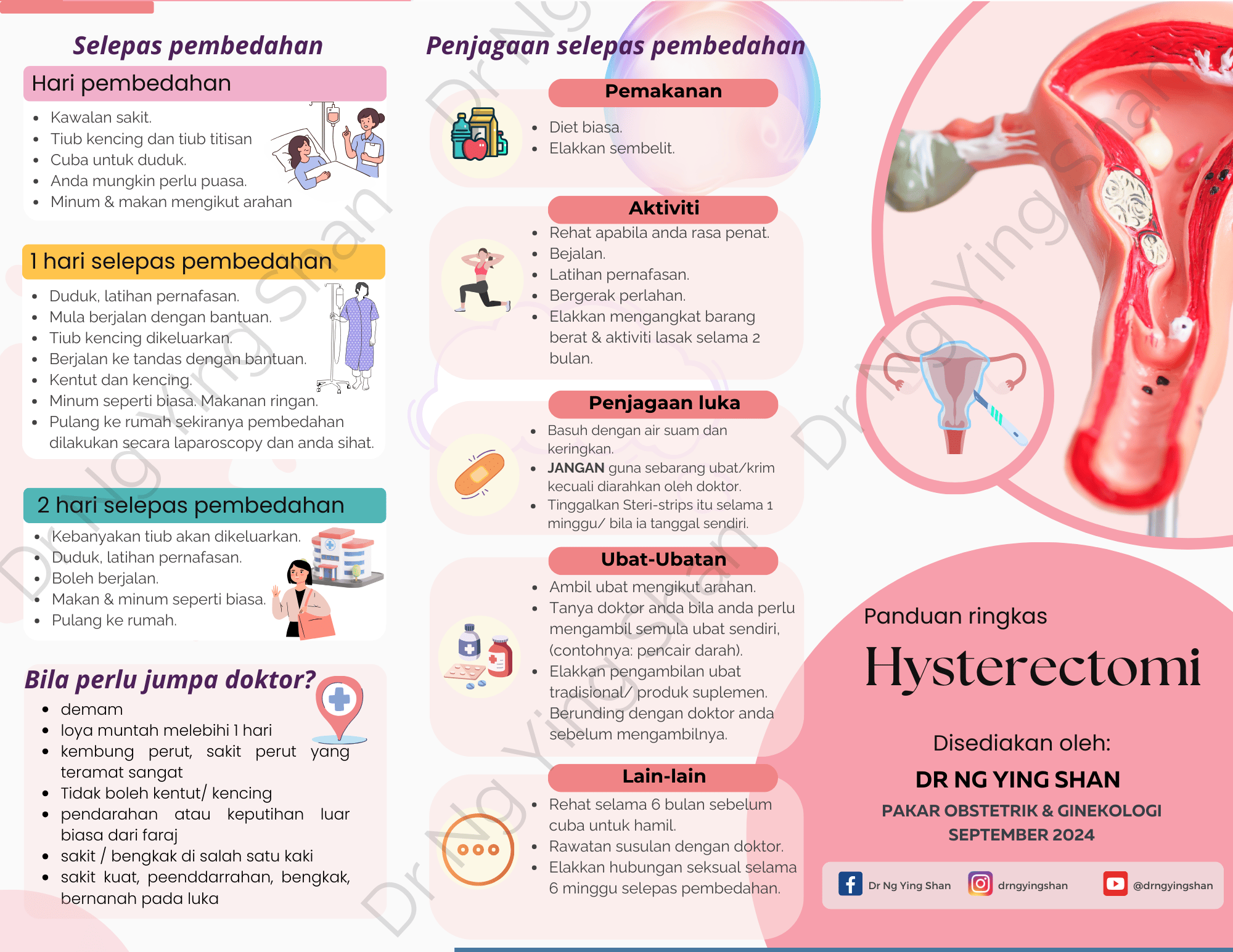
Click image to download
English
Bahasa Malaysia
中文
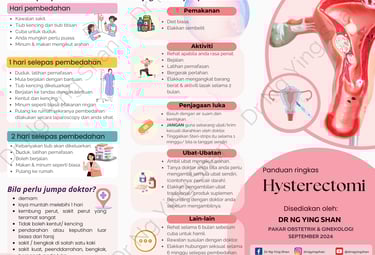
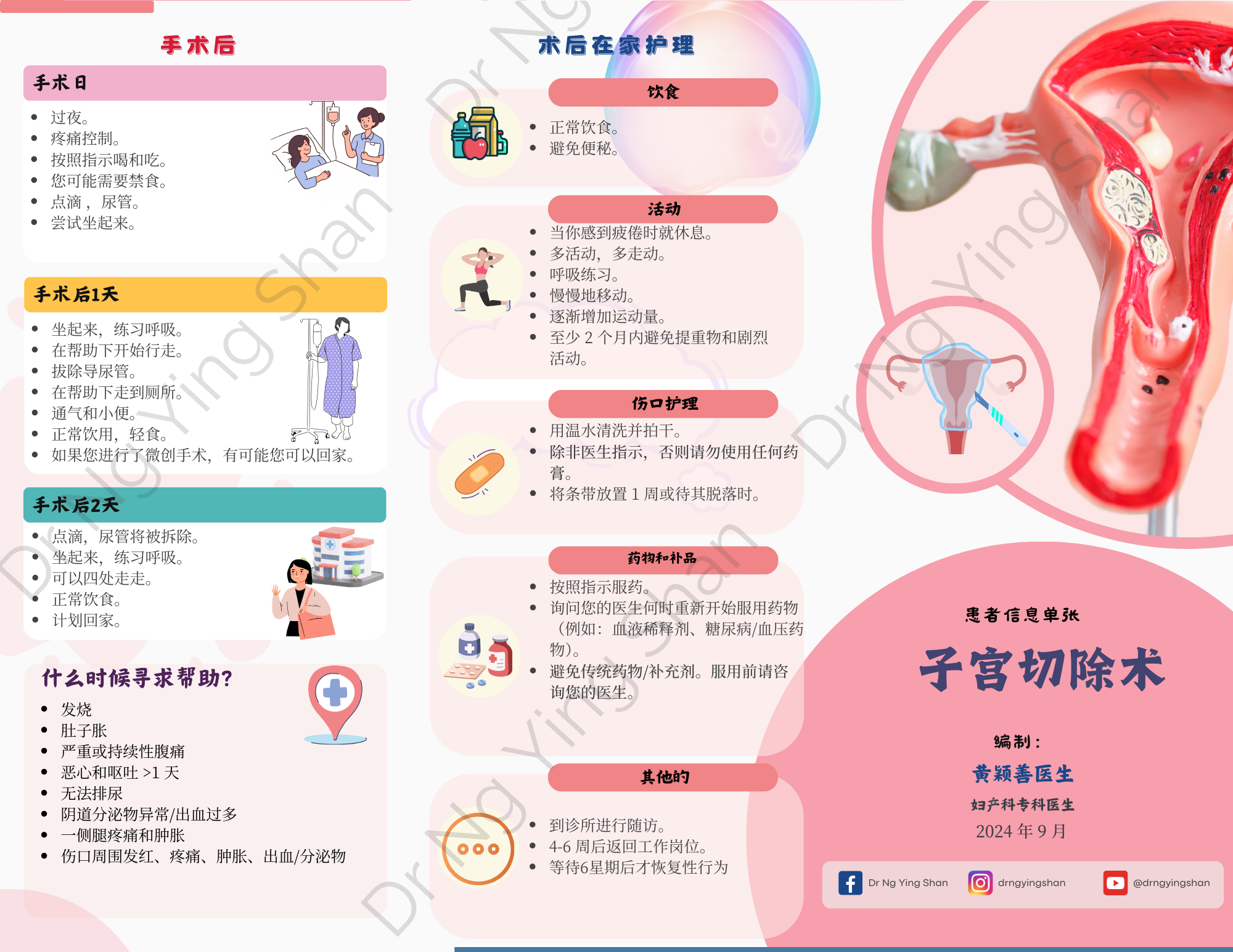
Frequently asked questions
What is hysterectomy?
Hysterectomy is a surgery to remove uterus (womb).
How is the operation performed?
It can be done through keyhole (laparoscopy) surgery / open (laparotomy) surgery / through vagina depending on suitability.
Why do I need hysterectomy?
Some conditions that may require hysterectomy:
Fibroids
Excessive menstrual bleeding that fail to response to medical treatment.
Pelvic organ prolapse
Endometriosis, adenomyosis
Pre-cancer changes of womb / cervix
Cancer of uterus, cervix and ovaries
What are the risk of hysterectomy?
Common risks:
Pain
Infection (wound, urine, chest)
Bleeding
Uncommon risks:
Damage to bladder/bowel/other organs
Bleeding requiring blood transfusion / removal of womb
Return to operating theatre
Pelvic abscess/infection
Blood clot in leg/lung
Are the fallopian tubes and ovaries removed during hysterectomy?
Most of the time, fallopian tubes will be removed during hysterectomy. In some cases, the ovaries are removed due to concurrent ovarian disease. This is called hysterectomy with salpingo-oopherectomy.
Discuss with your doctor whether your fallopian tubes and ovaries need to be removed during hysterectomy.
Laparoscopy vs laparotomy for hysterectomy.
Benefits of laparoscopic hysterectomy when compared to laparotomy:
Less pain
Less fever
Smaller scar
Shorter hospital stay
Faster recovery
Earlier return to work and normal activities
Lower risk of adhesion
(organ/tissue stick together)
Disadvantages
Requres more specialised surgical skills
May take longer time in certain cases (Eg: huge / multiple fibroids)
May not be suitable for certain cases, (Eg: advanced cancer)
Requires more specialised equiptments
Will I be menopause after hysterectomy?
After hysterectomy, you will not have periods. However, if your ovaries were not removed, you will not enter menopause immediately after surgery.
The ovaries that remain in your body will continue to produce hormones and you will still experience hormonal cycles till your natural menopausal age.
Some studies shows that women who has hysterectomy done might experience menopause 6-12 months earlier compare to women who did not have hysterectomy.
Contact us
Our clinics runs on appointment basis. Feel free to call us to set up an appointment. We welcome walk-in patients on weekdays, but please be aware that there may be a wait time.
Phone:
+60 82-365 777 (ext: 266)
+6012 594 9938 (WhatsApp only)
Email:
clinic@drngys.com
Clinic hours:
Monday - Friday: 9:00 AM - 4:30PM
Saturday : 9:00 AM - 12:30PM (appointment & alternate saturday only)
Sunday : close
Address:
Dr Ng Ying Shan,
KPJ Kuching Specialist Hospital,
Lot 18807, Block 11 Muara Tebas Land District, Jalan Stutong,
93350 Kuching, Sarawak
Disclaimer: The information provided in this website represents the views and opinions of the original creator. The information provided is intended for informational purposes only and is not intended to be a substitute for professional medical advice, diagnosis, or treatment. It's important to note that this website does not advocate for or endorse any specific tests, products, procedures, opinions, or information mentioned within its content. Always seek the advice of your physician or another qualified health provider for any questions you may have regarding a medical condition.
2026 All rights reserved © Dr Ng Ying Shan
免责声明:此网站提供的信息仅代表原始创作者的观点和意见。此网站提供的信息仅供参考,不旨在替代专业医学建议、诊断或治疗。此网站不主张或支持其内容中提及的任何特定测试、产品、程序、观点或信息。当您遇到任何健康问题时,请咨询您的医生或其他合格的医疗专业人员,,进行诊断与治疗。