

Cervical Smear & HPV
宫颈抹片检查与人乳头瘤病毒
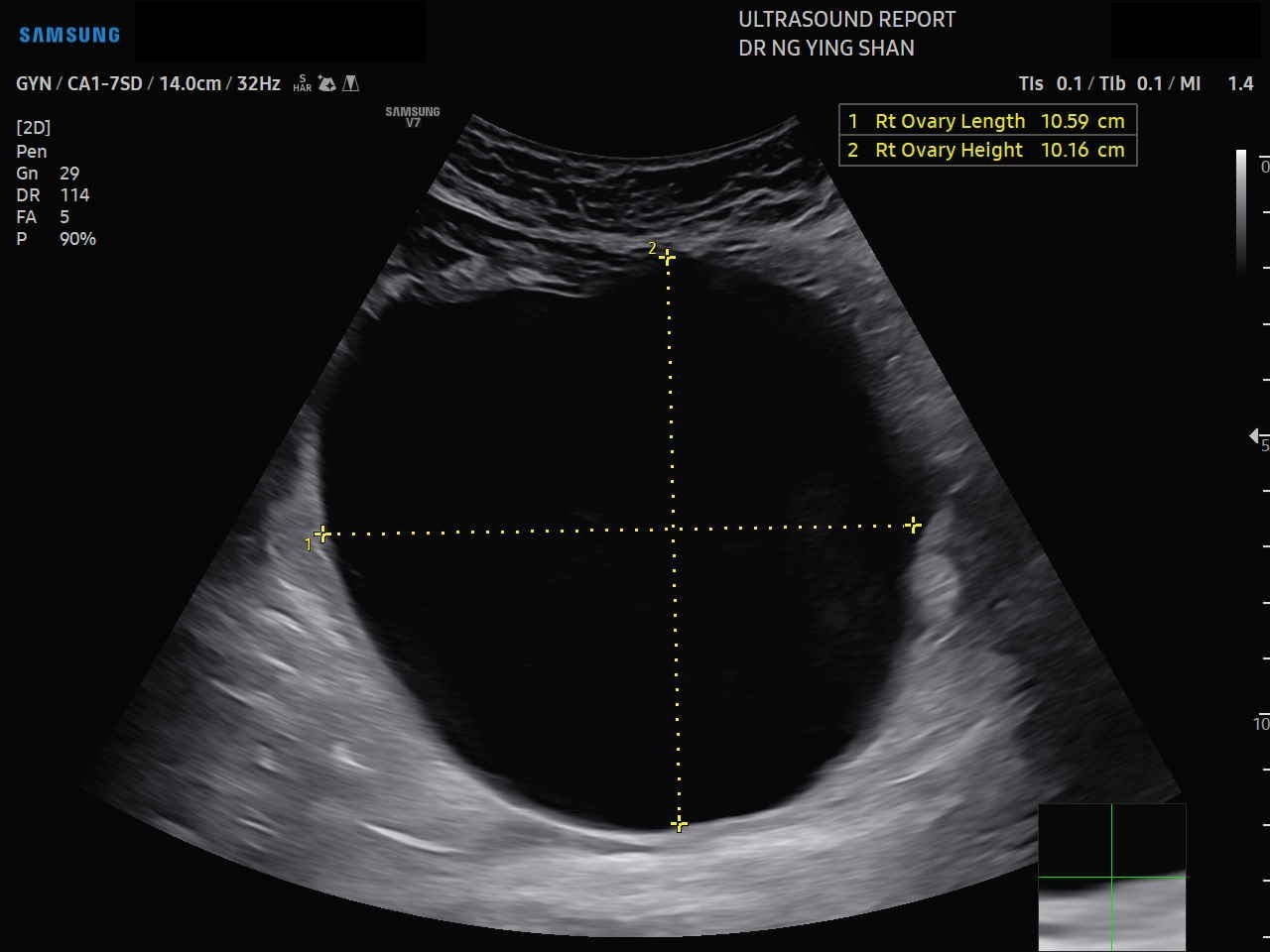
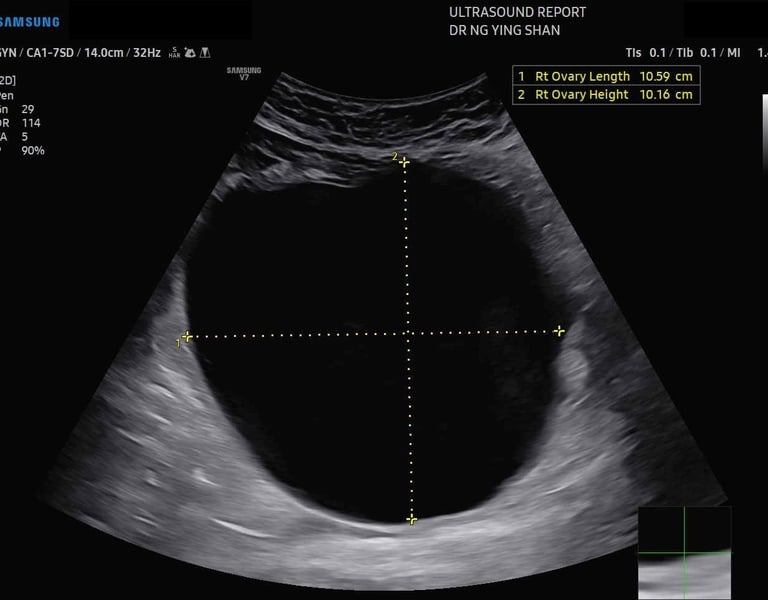
Ovarian cyst Kuching Gynae Kuching古晋妇产科 古晋卵巢
Cervical Smear
What is a Cervical Smear (Pap Smear)?
A cervical smear test, also known as a Pap smear or Pap test, is a simple procedure used to check for abnormal cells in the cervix (the lower part of the womb). It is not a test for cancer, but it can help prevent cervical cancer by detecting changes early, before they become serious.
Why is it Important?
Cervical cancer is one of the most preventable types of cancer. Regular screening:
Detects early cell changes
Helps treat issues before they turn into cancer
Polycystic Ovary Syndrome (PCOS)
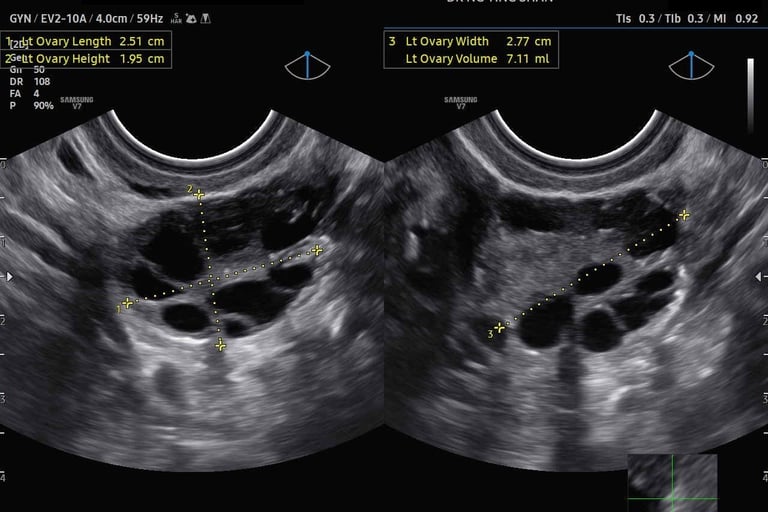
PCOS is a hormonal disorder, not a type of ovarian cyst.
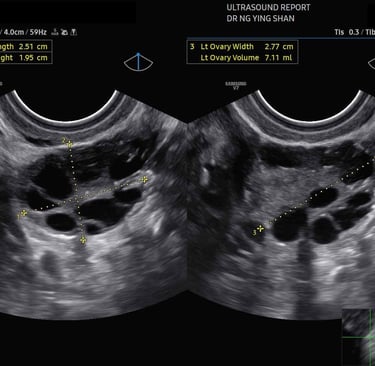
It causes many small follicles (not true cysts) to develop on the ovaries because they don’t mature properly.
This hormonal imbalance disrupts ovulation and leads to symptoms like irregular periods, difficulty getting pregnant, weight gain, and excess hair growth.
Although these immature follicles appear as “cysts” on ultrasound, they are different from typical ovarian cysts like functional or benign cysts.
Note: PCOS is Not a True Ovarian Cyst
Frequently asked questions
What are the symptoms?
No symptoms (very common)
Pelvic pain (sharp or dull)
Bloating or fullness in the abdomen
Pain during intercourse
Irregular or missed periods
Lower back or thigh pain
Difficulty emptying bladder or frequent urination
What are the consequences of doing nothing?
In many cases, small simple / functional cyst go away on their own. However, some of the cyst can:
Grow bigger
Rupture and cause bleeding or severe pain
Twisted or torsion
May be cancerous or become cancer
Always consult or follow up with your doctor if a cyst is found or symptoms occur.
When should I see a doctor?
Severe pelvic pain or sudden sharp pain
Bloating or fullness that doesn’t improve
Unexplained changes in your menstrual cycle
If you suspect a cyst has ruptured (pain, fever, vomiting)
Can I prevent ovarian cyst formation?
There is no guaranteed way to prevent ovarian cyst, but you can lower the risk by:
Taking hormonal birth control (to prevent ovulation related cysts)
Managing conditions like endometriosis
Can a blood test detect ovarian cyst?
No, a blood test cannot directly detect a cyst. The most common and effective method for detecting ovarian cysts is an ultrasound scan.
However, some blood tests can assist in further evaluation:
Ca 125: A tumor marker that may be elevated in ovarian cancer but can also be raised in certain benign conditions, such as endometriosis.
Hormone level: may be abnormal in hormone producing cyst.
What tests are required if I have an ovarian cyst?
The evaluation may include, but is not limited to, the following tests:
Pelvic examination
Ultrasound scan
Blood test
CT scan or MRI
Can ovarian cysts affect fertility?
Most cysts do not affect fertility
Some, like endometriomas or PCOS, can make it harder to get pregnant
A doctor can guide treatment if you're trying to conceive
How are ovarian cysts treated?
Treatment depends on each person’s situation and should be decided with a doctor.
Watch and wait: Most functional cysts go away by themselves.
Birth control pills: Helps prevent cysts that occur as part of the ovulation cycle. Not all types of cysts are suitable for this treatment.
Surgery: Needed if the cyst is big, painful, or might be cancer.
3. Malignant Non-Functional Cysts (Cancer)
Epithelial Ovarian Cancer
Most common type of ovarian cancer
Arises from the surface lining of the ovary
Often detected at a later stage
Germ Cell Tumors (some may not be cancer)
Examples: Dysgerminoma, Yolk sac tumor, Immature teratoma
Arises from the egg-producing cells
More common in teens and young women
Often treatable with surgery and chemotherapy
Sex Cord-Stromal Tumors (some may not be cancer)
Arise from the tissue that produce hormones
May secrete hormones (estrogen or testosterone) causing hormone related symptoms (early puberty, extra hair growth or post menopausal bleeding)
Example: Granulosa cell tumor, Sertoli-Leydig cell tumor
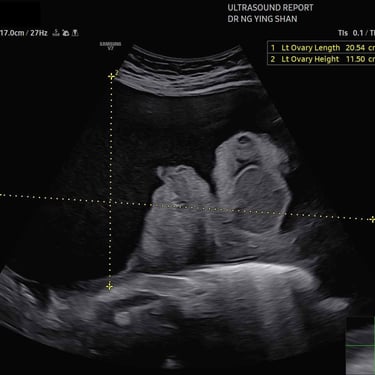
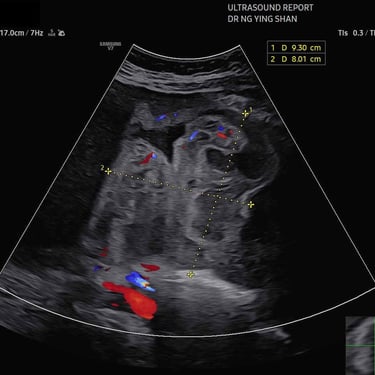
Ovarian cancer
Ovarian cancer
Contact us
Our clinics runs on appointment basis. Feel free to call us to set up an appointment. We welcome walk-in patients on weekdays, but please be aware that there may be a wait time.
Phone:
+60 82-365 777 (ext: 266)
+6012 594 9938 (WhatsApp only)
Email:
drngysclinic@gmail.com
Clinic hours:
Monday - Friday: 9:00 AM - 4:30PM
Saturday : 9:00 AM - 12:30PM (appointment & alternate saturday only)
Sunday : close
Address:
Dr Ng Ying Shan,
KPJ Kuching Specialist Hospital,
Lot 18807, Block 11 Muara Tebas Land District, Jalan Stutong,
93350 Kuching, Sarawak
Disclaimer: The information provided in this website represents the views and opinions of the original creator. The information provided is intended for informational purposes only and is not intended to be a substitute for professional medical advice, diagnosis, or treatment. It's important to note that this website does not advocate for or endorse any specific tests, products, procedures, opinions, or information mentioned within its content. Always seek the advice of your physician or another qualified health provider for any questions you may have regarding a medical condition.
2026 All rights reserved © Dr Ng Ying Shan
免责声明:此网站提供的信息仅代表原始创作者的观点和意见。此网站提供的信息仅供参考,不旨在替代专业医学建议、诊断或治疗。此网站不主张或支持其内容中提及的任何特定测试、产品、程序、观点或信息。当您遇到任何健康问题时,请咨询您的医生或其他合格的医疗专业人员,,进行诊断与治疗。